

Fantasy RPGs With Divine Ascension

Fantasy roleplaying games have always promised extraordinary journeys. A character can begin as an inexperienced adventurer, survive dangerous ruins, defeat monsters, uncover forgotten magic, and eventually become a legendary hero.
But what happens when the journey does not end at legendary?
What if the ultimate goal of a fantasy RPG campaign is not simply to become powerful, but to transcend mortality itself?
That is the central appeal of fantasy RPGs with divine ascension. Instead of treating godhood as something that belongs exclusively to NPCs, mythology, or the distant background of a setting, a divine ascension RPG makes the possibility of becoming a god part of the player character's long term journey.
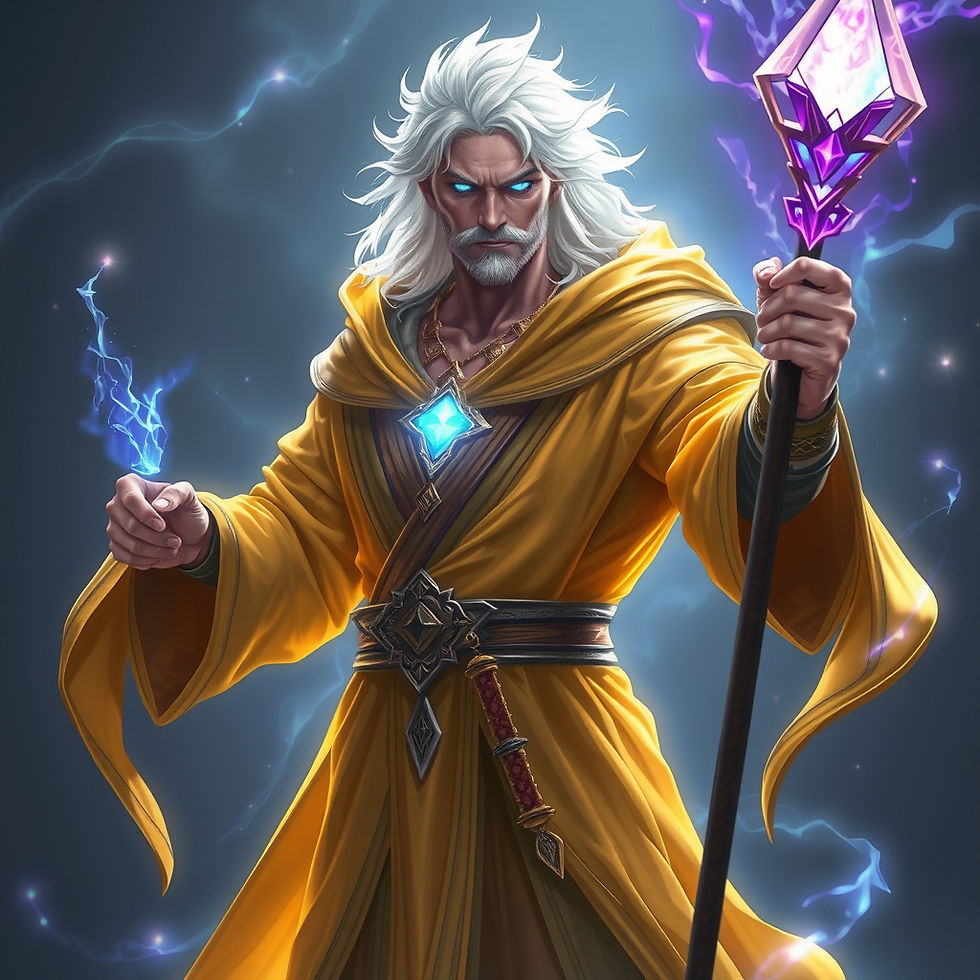
For Game Masters, this creates an exciting design opportunity. A campaign can begin with ordinary adventures and gradually evolve into something much larger: kingdoms rise and fall, religions form around the characters, ancient gods become rivals, mortal choices acquire cosmic consequences, and eventually the characters may stand among the very beings they once worshiped or feared. This kind of progression presents enormous storytelling challenges.
How do you keep a god level character interesting?
How can a Game Master maintain meaningful challenges when the player characters possess supernatural power?
And what makes divine ascension feel earned rather than simply handed to the characters?
The answers reveal why godhood can be one of the most fascinating forms of long term character progression in fantasy tabletop RPGs.
What Is Divine Ascension in a Fantasy RPG?
Divine ascension is the process through which a mortal character transcends ordinary limitations and becomes a supernatural, divine, or godlike being.
The concept can take many forms. A character might inherit divine power, discover a hidden cosmic truth, defeat an existing deity, accumulate enough legendary influence to become worshiped, receive a divine spark, or gradually transform through their own accomplishments. The important distinction is that divine ascension changes the scale of the campaign.
A traditional fantasy RPG might ask whether the heroes can save a village, defeat a dragon, rescue a kingdom, or prevent a war. A divine ascension campaign can eventually ask whether the characters can reshape civilizations, challenge cosmic powers, alter metaphysical laws, establish new religions, or determine the future of an entire world. That escalation is precisely what makes the concept so appealing.
Players searching for fantasy RPGs where characters become gods are often looking for more than simply larger numbers on their character sheets. They are looking for progression that feels genuinely transformative. The fantasy is not merely becoming stronger. It is becoming something fundamentally different.
Why Players Are Drawn to RPGs Where Characters Become Gods
One of the strongest attractions of divine ascension is the promise of an extremely long character arc.
A character who begins as an ordinary adventurer can eventually become a legendary figure whose name is remembered centuries later. Their decisions can create myths. Their victories can establish nations. Their failures can become historical disasters. This gives the campaign a powerful sense of continuity.
Instead of character progression being divided into disconnected levels or tiers, the entire campaign can feel like one enormous story about transformation.
From Mortal Adventurer to Mythic Hero
The earliest stage of a divine ascension campaign should still feel grounded. Characters need reasons to care about ordinary people, communities, companions, enemies, and personal goals. They should struggle against threats that are genuinely dangerous. They should experience failure, uncertainty, and vulnerability.
This is important because godhood becomes much more meaningful when the player remembers what mortality felt like. A character who once struggled to survive a dangerous encounter can eventually become powerful enough to influence the fate of nations. The contrast creates emotional weight. The journey itself becomes the reward.
From Hero to Legend
Eventually, the character's accomplishments should begin affecting the world beyond the immediate adventuring party. People might recognize their name. Kings might seek their assistance. Enemies might build entire strategies around stopping them. Temples could be established in their honor. Songs might be written about their exploits.
This is where reputation becomes especially valuable as a campaign mechanic. The character is no longer simply gaining personal power. They are gaining historical significance. That distinction is critical to designing an effective divine progression system.
How Should a Game Master Make Godhood Feel Earned?
The biggest mistake a Game Master can make with divine ascension is treating godhood as nothing more than a reward for reaching an arbitrary level. If a character reaches a particular number and suddenly becomes a god, the transformation can feel mechanical rather than mythological.
A better approach is to make ascension the culmination of everything the character has done. Their choices should matter. Their relationships should matter. Their reputation should matter. Their beliefs should matter. Their accomplishments should matter. Their failures should matter.
A divine ascension should feel like the world has finally recognized something that has been developing throughout the entire campaign. This principle is particularly useful for Game Masters designing homebrew RPG progression systems. The path toward godhood should ideally be visible long before the character actually reaches it.
Perhaps ancient prophecies mention them. Perhaps supernatural beings begin paying attention to them. Perhaps their actions attract followers. Perhaps powerful artifacts respond to their presence. Perhaps existing gods become increasingly concerned about their potential. The players should eventually realize that something extraordinary is happening.
Designing a Fantasy RPG Progression System Beyond Mortal Levels
A divine ascension RPG needs progression that can survive beyond traditional heroic play.
This is one reason classless and skill based RPG systems can be particularly interesting for mythic campaigns. Rather than defining a character primarily through a fixed class, a skill based system can allow the character to evolve according to the abilities, knowledge, powers, and experiences they accumulate. The result can be a much more organic progression path.
In a system such as Gods of Aumin, character development is designed around a classless, skill based structure with D100 mechanics, experience driven advancement, reputation, faith, and a progression that can eventually move from mortal adventurer toward hero, demigod, and godhood. The significance of that structure is not simply mechanical. It allows the campaign to ask a larger question:
Who does this character become?
That is often more interesting than asking which class they selected at character creation.
Why Classless RPG Systems Work Well for Divine Ascension
Classes are useful because they provide identity and structure. A warrior feels different from a wizard, and a rogue feels different from a cleric. But divine ascension introduces a fascinating problem:
What happens when the character becomes something that no existing class was designed to represent?
A classless fantasy RPG can address this naturally.
A character can develop martial expertise, magical knowledge, divine abilities, social influence, supernatural powers, and specialized skills without needing to fit neatly into a predefined archetype. This becomes especially valuable at high levels of play.
A character who began as a swordfighter might eventually become a war deity. Another might become a god associated with knowledge, exploration, storms, death, healing, invention, dreams, or something completely unique. The character's identity emerges from the campaign rather than being completely determined at character creation.
That is one of the reasons classless RPG design can complement long form mythic storytelling so effectively.
Divine Power Should Create New Problems, Not Eliminate Them
The biggest challenge of god level RPG play is obvious. If the characters can solve every problem with overwhelming supernatural power, where does the adventure go?
The solution is not necessarily to make enemies stronger.
Instead, the nature of the problems must change.
A mortal hero might ask, "Can I defeat this monster?"
A god might ask, "What happens to the civilization if I defeat this monster?"
That is a fundamentally different type of conflict.
Divine characters can encounter problems involving consequences, responsibility, competing divine powers, cosmic laws, worship, morality, reality itself, and the unintended effects of their decisions. Power does not eliminate conflict. It changes the consequences of conflict.
A divine character might be able to destroy a city but cannot do so without creating political catastrophe. They might be able to resurrect someone but discover that resurrection violates a cosmic law. They might be powerful enough to defeat an enemy but unable to determine what their followers will do afterward. This is how a Game Master preserves meaningful gameplay at the highest levels.
Domains Give Gods Identity and Limitless Story Potential
One of the most effective ways to design playable gods is through divine domains. A god should represent something. That domain might be obvious, such as war, fire, death, oceans, or magic. But it can also be much more specific.
A character might become a god of forgotten roads. Another might become the deity of forbidden knowledge. Another could become the patron of those who refuse destiny. These concepts provide immediate storytelling possibilities.
A divine domain creates identity while simultaneously establishing boundaries. If a deity governs storms, that does not necessarily mean they control every aspect of existence. If a deity governs memory, they may possess extraordinary authority over recollection while remaining vulnerable to powers associated with time, death, or reality. This creates opportunities for divine politics.
Gods can cooperate, compete, negotiate, deceive, ally, betray, and even fear one another.
The heavens become another adventuring environment.
Faith, Reputation, and the Relationship Between Mortals and Gods
Divine ascension becomes even more compelling when the game recognizes the relationship between a powerful character and the world around them.
What do people believe about the character?
Do they worship them?
Do they fear them?
Do they consider them a hero?
A tyrant?
A savior?
A monster?
A character's reputation can eventually become almost as important as their raw supernatural power. This is one of the areas where faith based mechanics can become powerful storytelling tools.
In Gods of Aumin, Faith and Reknown are part of the broader progression framework, reinforcing the idea that becoming divine is not simply a matter of accumulating combat power. The system connects character advancement to the character's growing significance within the world. That creates an important distinction between power and importance.
A character can become extraordinarily powerful without becoming culturally or spiritually significant. Godhood requires something more.
What Happens When Player Characters Become Gods?
When a character becomes divine, the campaign does not have to end. In fact, it can become something completely new.
The former adventurer might establish a temple, create a new religious movement, protect a kingdom, challenge an ancient deity, alter magical laws, or influence events through visions and divine manifestations. The Game Master can introduce conflicts that operate on multiple levels.
Mortals might fight wars in the character's name. Priests might interpret their teachings differently. Rival gods might attempt to undermine their influence. Entire civilizations might develop around their divine domain.
The player is no longer merely controlling an adventurer. They are helping define a piece of the setting. That creates an extraordinary collaborative worldbuilding opportunity.
How to Keep a God Level Campaign Fun
The secret is to remember that godhood is not the same thing as omnipotence. A character can possess incredible power while still having meaningful limitations.
Perhaps divine beings are restricted by cosmic laws. Perhaps using tremendous power attracts dangerous attention. Perhaps gods cannot directly interfere in certain mortal affairs. Perhaps rival deities possess equivalent authority. Perhaps every major divine action produces consequences somewhere else.
The Game Master should also continue giving players meaningful choices. The objective should not always be "defeat the strongest enemy." Instead, players might have to decide which civilization survives, which faction receives divine favor, whether an ancient evil should be destroyed or imprisoned, whether mortals should receive dangerous knowledge, or whether the character should intervene in a conflict at all.
The more powerful the characters become, the more consequential their decisions should become.
Divine Ascension Can Transform the Entire Campaign Setting
Perhaps the most exciting aspect of fantasy RPGs with divine ascension is that the setting itself can evolve alongside the characters.
A campaign might begin in a small village. Years later, that village could become a major city. A character who once slept in an inn might eventually have a temple constructed in their honor. An enemy defeated during the first campaign arc might become a historical footnote. A decision made by a low level character might eventually become the foundation of an entire religion.
This is long form campaign storytelling at its most ambitious. The world remembers. And when the players eventually become gods, they inherit a world that they helped create.
Building Your Own Divine Ascension Campaign
If you are a Game Master interested in running a campaign where characters eventually become gods, start by deciding what godhood actually means in your setting.
Determine where divine power comes from. Determine whether gods can die. Determine whether mortals can challenge them. Determine what separates a hero from a demigod.
Determine whether worship creates divine power or merely strengthens existing power. Determine whether gods have domains.
Most importantly, decide what happens to the world when someone ascends. The answers will define your campaign's mythology.
You do not need to reveal all of these answers to the players immediately. In fact, keeping some of the cosmology mysterious can make the eventual discovery much more powerful.
Let players uncover the rules of divinity through play.
Why Divine Ascension Works So Well for Long Term Fantasy Campaigns
A great tabletop RPG campaign is more than a sequence of encounters. It is a story about transformation.
Characters begin with limited knowledge, limited resources, and limited power. Through adventure, they acquire experience, relationships, scars, enemies, allies, knowledge, and influence.
Divine ascension takes that philosophy to its ultimate conclusion. The character does not simply become stronger. They become legendary. Then mythic. Then supernatural. Eventually, they may become one of the beings who shape the world itself. That is the fundamental appeal of fantasy RPGs with divine ascension.
The journey can begin with a single character walking down a dangerous road with a sword, a few coins, and a dream. And if the campaign is designed well, that same character might one day look down upon the world from a throne among the stars. The most exciting question is not whether the character can become a god. It is what kind of god they will become.
For Game Masters and players interested in exploring that kind of progression, Gods of Aumin provides one example of how a classless, skill based fantasy RPG can build divine ascension directly into its long-term character journey, combining D100 skill checks, experience driven advancement, faith, reputation, and a progression from mortal adventurer toward demigod and godhood.
Divine ascension does not have to be the end of a fantasy campaign.
It can be the beginning of its greatest chapter.


Comments