

How to Become a God in a TTRPG

Becoming a god is one of the most ambitious things a character can accomplish in a tabletop roleplaying game. Most fantasy campaigns begin with ordinary adventurers accepting dangerous quests, fighting monsters, exploring ancient ruins, and gradually becoming legendary heroes. But what happens when becoming a hero is not the end of the story?
What if your character could go further?
What if the warrior who once struggled against a band of raiders eventually commanded armies?
What if the wizard who began by learning simple spells eventually altered the fabric of reality?
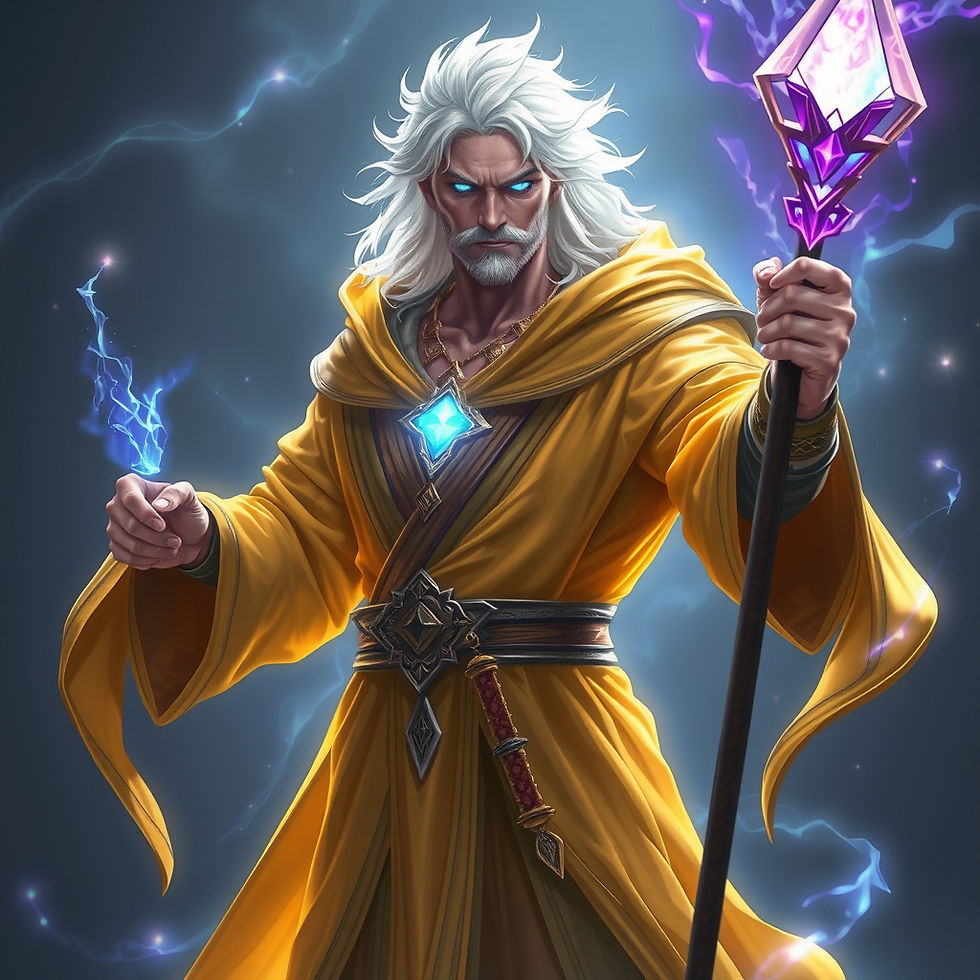
What if a character could transcend mortality, establish a divine domain, gather followers, challenge existing gods, and become a deity whose decisions reshape the campaign world?
That is the idea behind godhood in a TTRPG.

Becoming a god does not have to mean giving a character unlimited power and ending the campaign. When designed carefully, divine ascension can become one of the most rewarding forms of long term tabletop storytelling. It can transform a conventional fantasy campaign into a mythic saga about ambition, sacrifice, faith, power, responsibility, and the consequences of becoming something greater than mortal.
Systems such as Gods of Aumin are built specifically around this kind of progression, allowing characters to pursue a journey from mortal adventurer toward increasingly powerful forms of existence.
So how does a character actually become a god in a tabletop RPG?
What Does It Mean to Become a God in a TTRPG?
Before creating rules for divine ascension, a Game Master should decide what “becoming a god” actually means within the setting. Godhood should be more than gaining an enormous amount of hit points, learning stronger spells, or dealing astronomical amounts of damage. A deity represents a fundamental change in what a character is capable of influencing.
A mortal might save a village. A legendary hero might save a kingdom. A demigod might save an entire civilization. A god might determine whether civilizations rise or fall.
That distinction is important because divine characters require challenges that operate on a larger scale. Once a character becomes capable of influencing nations, supernatural forces, religions, magical laws, or entire worlds, ordinary adventuring challenges may no longer be sufficient.
The most successful godhood campaigns therefore treat ascension as a change in scale rather than simply an increase in numbers. A character should not merely become stronger. They should become more consequential.
Can You Become a God in a Tabletop RPG?
The answer depends entirely on the RPG system and the campaign being played.
Some tabletop RPGs are designed primarily around mortal or heroic characters. Others incorporate legendary tiers, divine characters, or mythological beings directly into their rules. Still others can accommodate godhood through extensive homebrew rules.
The important question is not whether every TTRPG allows characters to become gods. The important question is whether the system provides a satisfying way to support the journey.
A campaign about divine ascension needs mechanics capable of handling increasingly powerful characters while still providing meaningful choices and consequences. If characters simply become omnipotent, the game can quickly lose its tension.
This is one reason systems specifically designed around mythic progression can be interesting for Game Masters who want campaigns that extend beyond conventional fantasy power levels.
In Gods of Aumin, for example, the intended progression explicitly extends from Mortal to Hero to Demigod to God, making divine ascension part of the larger design philosophy rather than an afterthought.
The First Step Toward Godhood Is Becoming Legendary
Why Mortal Characters Need a Mythic Journey
A character should not wake up one morning and discover that they are suddenly a god without explanation. The journey toward godhood should begin long before the character reaches divine power.
Perhaps the character performs an impossible deed. Perhaps they defeat an ancient evil.
Perhaps they discover a forgotten cosmic truth. Perhaps an existing deity recognizes their potential. Perhaps they inherit a divine artifact. Perhaps their actions cause thousands of people to believe that they are destined for something greater. The possibilities are almost endless.
The most compelling divine ascension stories make the final transformation feel inevitable in retrospect. Players should be able to look back across dozens of sessions and realize that the seeds of their character's godhood were present from the beginning. This creates something much more powerful than simply reaching a high level. It creates mythology.
How Does a Character Ascend to Godhood?
There are many ways to design divine ascension mechanics, and there is no single correct answer.
One character might ascend through worship. Another might gain divinity by defeating a god. A third might discover an ancient source of cosmic power. Another might create an entirely new domain that has never existed before. Your setting's cosmology should determine what makes the most sense.
Divine Ascension Through Faith
Faith is one of the most natural foundations for godhood. If people believe strongly enough in a character, perhaps that belief begins to produce supernatural power. The character might establish temples, inspire religious movements, perform miracles, or become the central figure of an emerging faith. This approach makes worshippers important without necessarily reducing them to background scenery.
A Game Master can turn religious influence into a major campaign mechanic. Protecting a city might increase a deity's influence. Losing a sacred location might weaken it. A rival god might attempt to convert followers. A false prophecy could destabilize an entire religion. Suddenly, diplomacy and worldbuilding become just as important as combat.
Divine Ascension Through Power
Another approach is to make godhood the ultimate achievement of power. Perhaps characters accumulate extraordinary amounts of magical energy, experience, knowledge, or supernatural influence. Eventually, they cross a threshold beyond which mortal existence can no longer contain them.
This approach works particularly well in high powered fantasy campaigns because players can physically feel the progression. However, raw power should not be the only requirement. If becoming a god is simply a matter of accumulating the biggest number, godhood can feel like another level. The better approach is to combine power with something meaningful.
Divine Ascension Through Purpose
Perhaps the most interesting form of godhood comes from purpose. A character does not become a god simply because they are powerful. They become a god because they represent something. They become the deity of freedom after overthrowing an oppressive empire. They become the god of storms after surviving a supernatural cataclysm. They become the guardian of lost souls after spending their mortal life protecting the dead.
This makes divine identity an extension of character development. Godhood becomes the culmination of the character's story.
Choose a Divine Domain
One of the most important decisions in a godhood campaign is determining what a new deity represents. A divine domain gives godhood meaning.
A god of war should feel fundamentally different from a god of knowledge. A deity of death should interact with the world differently from a deity of nature, invention, dreams, oceans, or time.
Domains also solve an important game design problem: limits.
A god who can control absolutely everything is difficult to challenge. A god with a defined domain can be incredibly powerful while still having boundaries. This creates opportunities for rival deities.
A god of fire may have extraordinary influence over flame but limited authority over the ocean. A god of knowledge may know nearly everything about history but struggle to predict genuine randomness. A god of dreams may influence sleeping minds but have little control over someone who never sleeps.
The domain creates identity. The limitation creates gameplay.
How Do You Balance God Level Characters?
One of the biggest challenges in running a TTRPG with gods is maintaining meaningful conflict. If a character can destroy an army with a thought, defeating an army should no longer be the campaign's primary challenge. The Game Master must therefore change the nature of conflict.
Instead of asking whether the characters can defeat ten thousand soldiers, ask whether they can prevent a rival deity from manipulating those soldiers. Instead of asking whether they can survive a monster attack, ask whether they can prevent an ancient creature from corrupting the laws of reality. Instead of asking whether they can conquer a kingdom, ask whether they can convince the kingdom to follow them willingly.
God level campaigns work best when power creates larger problems rather than eliminating problems entirely. This principle is also useful when designing divine ascension mechanics. A character should gain more influence as they become more powerful, but that influence should create new responsibilities, enemies, and consequences.
Godhood Should Change the Campaign World
Let the World React to Divine Ascension
One of the biggest mistakes a Game Master can make is allowing a character to become a god while keeping everything else exactly the same.
If a mortal character becomes a deity, the world should notice. Religions might form. Kings might seek alliances. Existing gods might become threatened. Ancient prophecies might suddenly become relevant. Cultists might worship the new deity. Enemies might attempt assassination. Entire civilizations might interpret the character's ascension as a miracle, or a catastrophe.
The character's transformation should therefore create worldbuilding consequences. This is where a godhood campaign becomes particularly exciting.
The player is no longer merely asking, “What does my character do?”
They are asking, “What happens to the world because my character exists?”
What Challenges Can You Give a God?
Rival Gods
Rival deities are an obvious but effective source of conflict. An established god may consider the newly ascended character a threat. Another deity may attempt to recruit them. A third might want to destroy them before they become powerful enough to challenge the existing pantheon. Divine politics can become an entire campaign layer.
Cosmic Threats
Gods also need enemies that exist beyond ordinary mortal concerns. Ancient entities, primordial forces, cosmic phenomena, forgotten civilizations, reality breaking artifacts, and supernatural beings can all serve as threats.
The key is that the threat should not merely be physically powerful. It should challenge something the character cares about. A cosmic entity that can erase a god's followers may be more interesting than an enemy that simply has ten times the deity's combat statistics.
Moral Consequences
Perhaps the most powerful challenge for a god is responsibility.
A mortal hero might save one person. A deity may have the ability to save ten thousand people, but doing so could destroy an entire civilization elsewhere. Suddenly, divine power creates moral dilemmas.
Who deserves to be saved?
Should a god interfere in mortal wars?
Should a deity punish followers who commit atrocities?
Can a god remain neutral when their domain is threatened?
These questions can create some of the most memorable sessions in a high level TTRPG campaign.
Godhood Does Not Have to End the Campaign
A common assumption is that becoming a god should be the conclusion of a character's story. It does not have to be. Godhood can instead mark the beginning of a completely new campaign tier.
The characters may begin interacting with divine realms, competing pantheons, cosmic civilizations, primordial entities, and metaphysical forces. They may establish religions. They may create new worlds. They may protect civilizations. They may fight divine wars.
They may even discover that becoming a god was only the beginning of a much larger mystery.
This approach allows a campaign to evolve naturally instead of ending when characters reach the highest conventional power tier.
Designing a Mortal to God Campaign
If you are a Game Master who wants to run a campaign where characters eventually become gods, establish that possibility early. You do not necessarily need to tell the players exactly how ascension will happen. Instead, seed the world with evidence.
Ancient gods can mention legendary mortals who transcended death. Forgotten ruins can contain records of previous ascensions. Religious texts can describe impossible beings. Strange artifacts can react to the player characters.
As the campaign progresses, these details gradually become meaningful. The players eventually realize that godhood is not merely an abstract possibility. It is something their characters could actually achieve. That realization can become one of the most powerful turning points in a long form campaign.
Gods of Aumin and the Idea of Becoming a God
The concept of divine ascension is central to the identity of Gods of Aumin, a classless, skill based mythic fantasy TTRPG designed around characters forging their own paths rather than being confined to traditional classes. Its progression philosophy explicitly supports the journey from mortal adventurer toward heroic, demigod, and godlike existence.
That design philosophy creates an interesting alternative to the traditional fantasy campaign structure. Instead of treating godhood as something that happens to an NPC after the campaign ends, deific ascension can become part of the character's long term journey. The result is a campaign that can begin with familiar fantasy adventures and gradually expand into something much larger.
This philosophy also reflects a broader interest among tabletop players in high powered campaigns, classless progression, mythic characters, and RPG systems where characters can continue growing beyond conventional heroic limitations. Gods of Aumin describes itself specifically as a system for players and Game Masters interested in long form progression and the possibility of becoming gods.
The Real Secret to Becoming a God in a TTRPG
The most important rule for divine ascension is surprisingly simple: Godhood should be earned through the story.
The character should not merely become powerful enough to qualify. They should become worthy of the transformation, or deliberately become something terrible enough to seize it. Their choices should matter. Their victories should have consequences. Their failures should leave scars. Their enemies should remember them. Their allies should tell stories about them. And when the moment of ascension finally arrives, the players should understand exactly why this character became a god.
That is what transforms a mechanical achievement into mythology. The best godhood campaigns are not really about having unlimited power. They are about discovering what someone would do if they had it.
A character who begins as an unknown adventurer can eventually become the subject of legends, the center of a religion, the enemy of ancient gods, or the creator of a new age. And when the campaign reaches that point, the question is no longer whether the character can become a god.
The question becomes: What kind of god will they become?
That is where a TTRPG campaign can stop being merely an adventure and become a myth.


Comments